
An LS engine is a family of General Motors (GM) small-block V8 engines that debuted with the LS1 in the 1997 Chevrolet Corvette. These engines became popular in performance cars, trucks, muscle cars, and engine-swap projects because they combine a compact V8 layout with a wide range of factory configurations and aftermarket support.
If you are researching an LS engine for sale, planning a replacement, or considering an LS swap, understanding the different engine versions is essential. A 5.3L truck engine, a 6.0L LQ4, and a 6.2L LS3 may all be discussed in the same LS-engine conversation, but they do not have identical specifications or fitment requirements.
What Does LS Mean in an LS Engine?
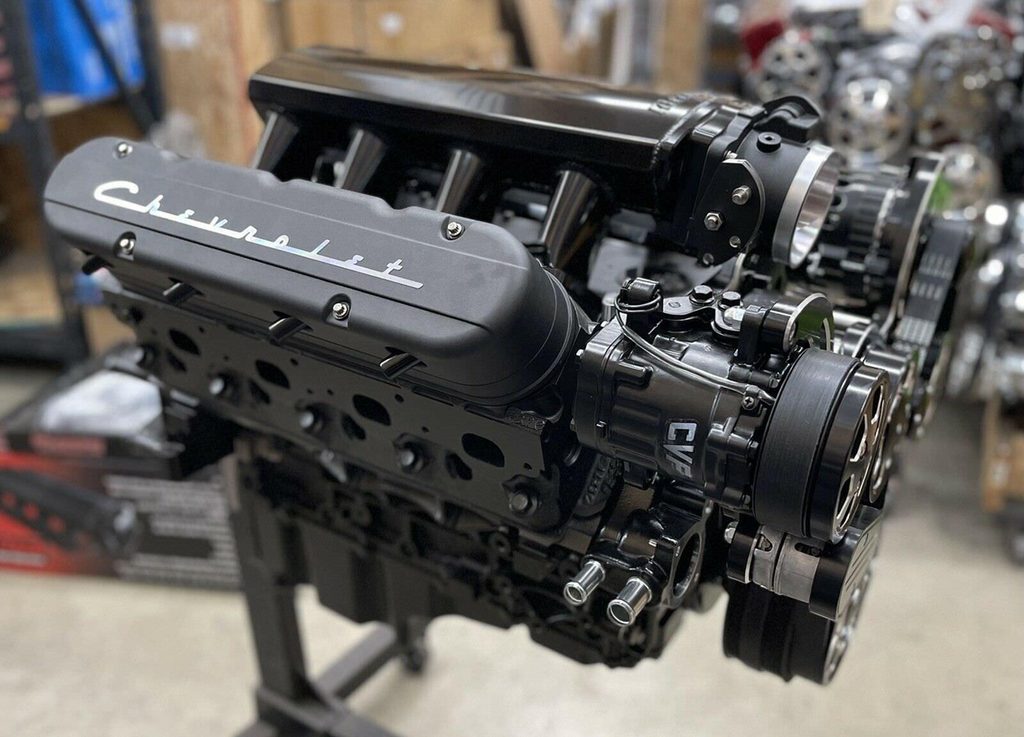
LS is the designation associated with GM’s modern LS engine family. The LS1 established the name when it debuted in the C5 Chevrolet Corvette for the 1997 model year.
General Motors commonly classified these engines under its Gen III and Gen IV small-block V8 architecture. Enthusiasts and engine builders widely adopted the LS name for the broader family of related engines.
The LS designation does not tell you everything about an engine. It does not identify its exact displacement, horsepower, block material, or original vehicle application. Those details depend on the specific engine code and configuration.
It is also important to distinguish an LS engine from an LS vehicle trim level. Chevrolet has used LS as a trim designation on certain models, but a vehicle with an LS badge does not necessarily have an LS-family V8.
What Makes an LS Engine Different?
LS engines retain the traditional pushrod V8 layout while incorporating updated design and manufacturing features. Their popularity comes from a combination of packaging, performance options, and parts availability.
Several characteristics help explain their appeal.
Compact pushrod V8 design
LS engines use an overhead-valve design with a camshaft located in the engine block. This layout can make the engine relatively compact compared with some overhead-cam V8 designs.
That packaging can be useful when planning a swap into a vehicle with limited engine-bay space. However, actual clearance depends on the engine, oil pan, accessories, mounts, steering components, and chassis.
Multiple displacements and configurations
The LS family includes engines with different displacements, cylinder heads, rotating assemblies, and factory power ratings.
Common examples include 5.3L truck engines, 5.7L LS1 and LS6 engines, 6.0L LS2 and truck variants, 6.2L LS3 engines, and the 7.0L LS7.
These engines are not interchangeable in every application. Even engines with similar displacement can differ in block design, sensors, electronics, intake configuration, and internal components.
Broad aftermarket support
The LS platform has a large aftermarket covering intake systems, camshafts, cylinder heads, engine management, exhaust components, and other performance parts.
That support gives builders different ways to approach a project. One owner may prioritize a dependable street setup, while another may be building a track car or a high-output performance engine.
The right combination depends on the intended use, budget, supporting modifications, and engine condition.
What Are the Different Types of LS Engines?
The LS family covers several well-known engine codes. The table below highlights some of the most recognizable examples.
| Engine | Displacement | General application or role |
|---|---|---|
| LS1 | 5.7L | Corvette and other GM performance cars |
| LS2 | 6.0L | Selected GM performance cars |
| LS3 | 6.2L | Corvette and Camaro SS applications, among others |
| LS6 | 5.7L | Higher-performance Corvette Z06 and Cadillac CTS-V applications |
| LS7 | 7.0L | High-performance Corvette Z06 applications |
| LS9 | 6.2L | Supercharged Corvette ZR1 application |
| LM7 | 5.3L | Gen III truck V8 |
| LQ4 | 6.0L | Gen III truck V8 with an iron block |
| LQ9 | 6.0L | Higher-output Gen III truck V8 with an iron block |
This is a selection of common examples, not a complete list of every LS-family or LS-based engine.
The LM7, LQ4, and LQ9 are particularly relevant to truck owners and swap builders. They use engine codes that do not begin with “LS,” yet they are commonly grouped with LS-based engines because of their architecture.
For any purchase, verify the specific engine code rather than relying on displacement or a general LS label.
Are 5.3L and 6.0L Vortec Engines LS Engines?
Some GM Vortec truck engines belong to the broader LS-based family. The 5.3L LM7 and 6.0L LQ4 are common examples.
The Vortec name was used across multiple GM engine designs, so it should not be treated as proof that every Vortec engine is an LS-based V8.
Here is a practical comparison of two popular truck-engine options.
5.3L LS-based truck engines
A 5.3L truck engine is often considered for budget-conscious swaps and replacement projects. Exact specifications depend on its engine code, model year, and configuration.
Before buying one, check the block material, cylinder-head setup, fuel system, sensors, and engine-management requirements. Do not assume that all 5.3L engines have the same output or supporting components.
6.0L LQ4 and LQ9 engines
The LQ4 and LQ9 are 6.0L Gen III truck V8s with iron blocks. They are frequently considered for performance builds because they offer a larger displacement than a 5.3L and have an established aftermarket.
The LQ4 and LQ9 are related, but they are not identical. Their factory configurations and output ratings differ, and a used engine may have been modified during its previous service life.
For a swap, evaluate the individual engine’s condition, accessories, wiring, ECU requirements, and intended power goals rather than choosing based on displacement alone.
How Much Horsepower Does an LS Engine Make?
There is no single horsepower rating for an LS engine. Output varies by engine family, displacement, factory application, calibration, and modifications.
For example, Chevrolet’s published specifications for the production LS1, LS3, and LS7 differ substantially. The LS1 is a 5.7L engine, the LS3 is a 6.2L engine, and the LS7 is a 7.0L engine. Their factory ratings also depend on the particular application and model year.
Modified engines can produce different results, but advertised horsepower should be evaluated carefully. A build’s output depends on the complete combination, including the engine’s internal components, camshaft, cylinder heads, intake, fuel delivery, exhaust, tuning, and any forced-induction system.
When comparing engines for sale, ask whether the listed horsepower is a verified dyno result, a manufacturer rating, or an estimate. These figures are not equivalent.
What Cars Have LS Engines?
LS engines appeared in a range of GM performance vehicles, while related LS-based engines were used in trucks and SUVs. Some well-known factory applications include:
- Chevrolet Corvette: LS1, LS2, LS3, LS6, LS7, and other variants depending on generation and model.
- Chevrolet Camaro: Several LS-family engines appeared across different model years and trims.
- Pontiac Firebird and Trans Am: Certain late-model examples used the LS1.
- Pontiac GTO: Selected model years used LS-family V8 engines.
- Cadillac CTS-V: Certain generations used engines including the LS6, LS2, and supercharged LSA.
- GM trucks and SUVs: Many used related Vortec engines, including 4.8L, 5.3L, and 6.0L variants.
These examples are not a universal fitment list. The exact engine depends on the vehicle’s model year, trim, and original powertrain.
LS engines are also used in custom builds that did not originally come with them. Classic muscle cars, older pickups, street rods, and restomods are common candidates, but a successful swap requires more than fitting the engine into the bay.
Is an LS Engine Good for an Engine Swap?
An LS engine can be a practical choice for a suitable swap, but the best option depends on the vehicle and the intended use.
Before selecting an engine, consider the following.
1. Vehicle fitment
Check engine mounts, oil-pan clearance, hood clearance, steering components, and accessory placement. A combination that fits one chassis may require different parts in another.
2. Transmission compatibility
Confirm the transmission’s bellhousing pattern, torque capacity, mounting arrangement, and electronic requirements. You may also need a compatible flexplate or flywheel, converter or clutch, and related hardware.
3. ECU and wiring
Determine whether the engine comes with a suitable ECU, wiring harness, sensors, and any required controllers. A complete engine package does not necessarily include every part needed to start and operate the vehicle.
4. Fuel and cooling systems
The fuel delivery system, radiator, fans, hoses, and other supporting components must suit the selected engine and vehicle.
5. Emissions and road-use requirements
Emissions rules vary by state and vehicle. If the vehicle will be driven on public roads, confirm the applicable requirements before selecting an engine and conversion parts.
6. Engine condition and documentation
For a used engine, ask about mileage, testing, known issues, included accessories, and warranty terms. For a rebuilt or crate engine, review its specifications and the exact package contents.
This checklist can help prevent a common mistake: buying an engine that looks suitable on paper but requires additional parts or fabrication that were not included in the original budget.
How Much Does an LS Engine Cost?
LS engine prices vary widely. A used truck engine, a tested replacement engine, a rebuilt long block, and a performance crate-engine package are different products and should not be compared by price alone.
The main factors affecting cost include:
- Engine code and displacement
- Used, rebuilt, or new condition
- Mileage and documented testing
- Internal components and modifications
- Included intake, accessories, ECU, and wiring harness
- Warranty coverage
- Shipping, installation, and additional swap parts
A lower-priced engine may require more work or additional components before installation. A more complete package may reduce sourcing time, but you should still verify everything included.
When comparing options, look at the total project cost rather than the engine price by itself.
How to Choose the Right LS Engine
Start with the vehicle and the job the engine needs to perform. A daily-driven street car, a classic truck, a towing-oriented build, and a dedicated performance car may call for different combinations.
Use this simple decision process:
- Define the vehicle, intended use, and realistic power target.
- Identify which engine families and configurations can fit the application.
- Compare exact engine codes and specifications.
- Confirm the ECU, harness, transmission, and accessory requirements.
- Review engine condition, included parts, testing, and warranty.
- Calculate the full installation budget, including fabrication and supporting systems.
If you are shopping for an LS engine for sale, compare complete specifications and package contents before choosing. A carefully matched engine and supporting components can make the project easier to plan and help avoid unnecessary compatibility problems.
Frequently Asked Questions
What is an LS engine?
An LS engine is generally a GM small-block V8 from the modern engine family introduced with the LS1 in the 1997 Chevrolet Corvette. The family includes multiple displacements and configurations for performance cars and related truck engines.
What is the difference between LS and Vortec engines?
LS usually refers to the modern GM performance-engine family, while Vortec was used as a name for many GM truck engines. Some Vortec truck engines are LS-based, but the names are not interchangeable across every GM engine generation.
Is a 5.3L engine an LS?
Some 5.3L GM truck engines, such as the LM7, are LS-based. Other GM engines with a 5.3L displacement may differ in architecture and generation. Verify the engine code before buying parts or planning a swap.
Is a 6.0L LQ4 an LS engine?
The LQ4 is a Gen III 6.0L GM truck V8 commonly grouped with the LS-based engine family. It uses an iron block, and its exact configuration should be verified before planning a build.
Which LS engine is best for a swap?
The best engine depends on the vehicle, budget, desired output, installation requirements, and intended use. A 5.3L truck engine, a 6.0L LQ4 or LQ9, and a performance-oriented LS3 are different options with different trade-offs.
Are all LS engines interchangeable?
No. Engines may share some design features, but differences in displacement, block and head configuration, sensors, oil pans, accessories, electronics, and transmissions can affect compatibility. Confirm the specific combination before purchasing.
Final Thoughts
The LS engine family gives builders a broad range of GM V8 options, from truck-based 5.3L and 6.0L engines to performance variants such as the LS3 and LS7. Their shared heritage does not make every engine identical or suitable for every vehicle.
For a replacement or swap, identify the exact engine code, confirm fitment, and compare the parts included with each package. Those checks are more useful than choosing an engine based on the LS name alone.
[…] a closer look at the family, see what an LS engine is and the differences between LS1, LS2, LS3, and LS6 […]