
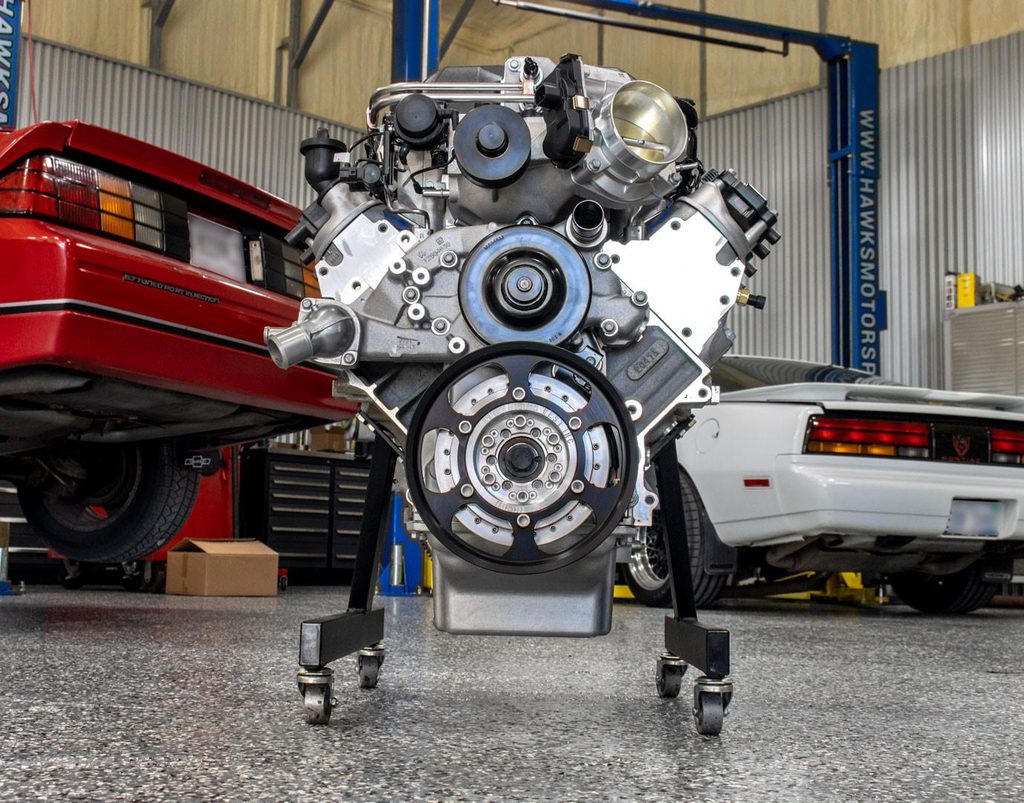
If you have ever shopped for a Chevy V8, researched an engine swap, or compared GM crate engines, you have probably seen the term LS. So, what does LS stand for in Chevy engines? LS is the designation associated with GM’s modern LS engine family, which grew from the LS1 V8 introduced in the 1997 Chevrolet Corvette. It is commonly used to describe a family of small-block V8 engines, rather than a phrase with one universally confirmed full-form expansion.
The LS family became popular in performance cars, trucks, and custom builds because it offers a wide range of displacements, engine configurations, and performance options. Understanding the name is the first step toward identifying the right engine for a replacement, restoration, or performance project. what does LS stand for CBL
What Does LS Mean on a Chevy?
In automotive discussions, LS usually refers to the GM LS engine family. The LS1 was the engine that helped establish the name, and the designation later became widely associated with related GM V8 engines.
You may encounter LS in several contexts:
- LS1, LS2, and LS3: Engine designations associated with different versions of GM’s V8 engine family.
- LS engine swap: A project that installs a compatible LS-family engine into a vehicle that did not originally use it.
- LS crate engine: An engine supplied as a packaged unit for a replacement or performance build.
- LS-based truck engine: Certain Vortec truck V8s share the LS platform’s architecture, even when their engine codes do not begin with LS.
One important detail: Chevrolet also uses LS as a trim-level designation on some vehicles. An LS badge on a car or truck does not automatically mean the vehicle has an LS-family V8. The meaning depends on the model, model year, and context.
Is LS an Acronym for Something?
There is a common misconception that LS must stand for a phrase such as “Luxury Sport” or “Long Stroke.” These explanations are often repeated online, but they should not be treated as the definitive meaning of the engine designation.
The more useful technical explanation is that LS became associated with the LS1 engine designation and then with the broader family of related GM V8 engines. General Motors has referred to the underlying designs by generation, including Gen III and Gen IV small-block engines.
That distinction matters because the LS family includes multiple engines with different specifications. The two letters alone do not tell you an engine’s displacement, horsepower, block material, or original vehicle application.
What Is an LS Engine?
An LS engine is generally a GM small-block V8 from the modern engine family that began with the LS1 in 1997. The LS1 was a 5.7-liter V8 introduced in the Chevrolet Corvette.
Over time, GM developed additional versions for sports cars, performance vehicles, and trucks. These engines vary in displacement, cylinder-head design, block construction, fuel-management features, and factory output.
Some widely known LS-family engines include:
| Engine | Displacement | General description |
|---|---|---|
| LS1 | 5.7L | Original LS engine introduced in the C5 Corvette |
| LS2 | 6.0L | Later-generation performance V8 used in selected GM vehicles |
| LS3 | 6.2L | Performance V8 introduced in the Chevrolet Corvette |
| LS6 | 5.7L | Higher-performance development related to the LS1 |
| LS7 | 7.0L | High-performance V8 used in the Corvette Z06 |
| LS9 | 6.2L | Supercharged V8 used in the Corvette ZR1 |
These examples are not a complete list of the family. GM also produced LS-based truck engines with codes such as LM7 and LQ4. Some engines commonly discussed alongside the LS family have different names, so it is important to confirm the exact engine code before ordering parts or planning a swap.
Are 5.3L Vortec Engines LS Engines?
This is one of the most common questions among truck owners and people researching affordable V8 swaps.
Some 5.3L Vortec engines belong to the broader LS engine family or share its architecture, even though their engine codes may not start with “LS.” For example, the LM7 is a 5.3L truck V8 commonly associated with the Gen III LS-based platform.
However, not every GM V8 labeled Vortec should automatically be classified as an LS-family engine. GM has used the Vortec name across different engine designs and generations.
If you are considering a 5.3L engine, identify its engine code, model year, block type, and original application. Those details are more useful than relying on the Vortec or LS name alone.
What Is the Difference Between LS Engines and LS Trim Levels?
The term LS can refer to two different things, depending on where you see it.
LS as an engine designation: This usually refers to the GM LS engine family or an individual engine such as the LS1 or LS3.
LS as a vehicle trim: Chevrolet and other GM brands have used LS to identify certain equipment or trim levels on specific models. In that context, LS describes the vehicle’s version or equipment package, not necessarily its engine family.
For example, a vehicle wearing an LS badge may have a four-cylinder engine, a V6, or a V8, depending on the model and year. The badge by itself is not enough to establish engine identity.
If you are buying a used vehicle or an engine, check the vehicle identification information and the engine code rather than assuming that every LS badge refers to an LS V8.
Why Are LS Engines Popular for Engine Swaps?
LS engines are common in custom builds because the family includes many engine options and has a substantial aftermarket. Builders use LS-family engines in muscle cars, classic trucks, restomods, and other projects.
The reasons vary by build, but often include:
- A broad range of engine choices: Options include 5.3L, 5.7L, 6.0L, 6.2L, and larger performance variants.
- Modern engine technology: Many versions use electronic fuel injection and distributorless ignition.
- Parts and aftermarket support: A large community of builders and suppliers supports LS-related projects.
- Different performance paths: Depending on the engine and build, owners may prioritize street driving, towing applications, naturally aspirated power, or forced induction.
- Swap flexibility: LS-family engines have been installed in many types of vehicles, although fitment is never guaranteed by the engine name alone.
An engine swap still requires careful planning. Engine mounts, oil-pan clearance, transmission compatibility, wiring, ECU requirements, fuel delivery, cooling, exhaust routing, and emissions rules can all affect the final setup.
A complete package may simplify some parts of the project, but you should confirm exactly what is included before buying.
How Do You Identify Which LS Engine You Have?
If you are replacing an engine or planning a swap, identifying the exact engine is more important than knowing that it is an LS.
Use these checks as a starting point:
- Find the engine code. Look for the relevant identification markings and documentation for the engine.
- Confirm the original vehicle and model year. This can help narrow down the possible engine options.
- Verify displacement. Common LS-family displacements include 5.3L, 5.7L, 6.0L, and 6.2L, among others.
- Check the block and component configuration. Block material, cylinder heads, intake, sensors, and accessory arrangements can vary.
- Confirm electronics and transmission requirements. The ECU, wiring harness, transmission, and vehicle systems must work together.
- Verify the complete package. Before ordering, check whether the engine includes accessories, an ECU, a harness, a flywheel or flexplate, and other components you need.
Do not assume that two engines with the same displacement are interchangeable without modifications. Engine codes and configuration details can affect compatibility, wiring, tuning, and installation.
Frequently Asked Questions
What does LS stand for in Chevy engines?
LS is the designation associated with GM’s modern LS engine family, which began with the LS1 in the 1997 Chevrolet Corvette. It is not best understood as an acronym with one universally confirmed expansion.
What does LS mean on a Chevrolet car?
It depends on the context. LS can refer to an engine-family designation, such as LS1 or LS3, or to a vehicle trim level used on certain Chevrolet models. An LS trim badge does not automatically indicate an LS-family V8.
Is an LS engine the same as a small-block Chevy?
The LS family belongs to GM’s small-block V8 lineage, but it differs from earlier small-block Chevrolet designs in important areas of architecture and components. Older small-block engines and LS engines should not be assumed to share all parts or fitments.
Is a 5.3 Vortec an LS engine?
Some 5.3L Vortec engines, including the LM7, are part of the broader LS-based engine family. Other engines using the Vortec name may have different designs, so check the engine code and generation.
Who makes LS engines?
The LS engine family was developed by General Motors. Chevrolet vehicles and Chevrolet Performance products are closely associated with the family, while related engines have also appeared in vehicles from other GM brands.
Which LS engine is best?
There is no single best LS engine for every project. The right choice depends on your budget, power goals, vehicle use, fitment requirements, and whether you prefer a used engine, rebuilt unit, or crate-engine package. Start with the application and verify the specifications before choosing.
Final Takeaway
So, what does LS stand for in Chevy engines? LS is the designation that became associated with GM’s modern LS V8 engine family after the LS1 debuted in the 1997 Corvette. It is not a reliable shortcut for identifying a specific engine’s displacement, power output, or compatibility.
If you are choosing an engine for a replacement or swap, focus on the exact engine code, specifications, electronics, transmission requirements, and included components. Those details will help you make a better decision than the LS label alone.